
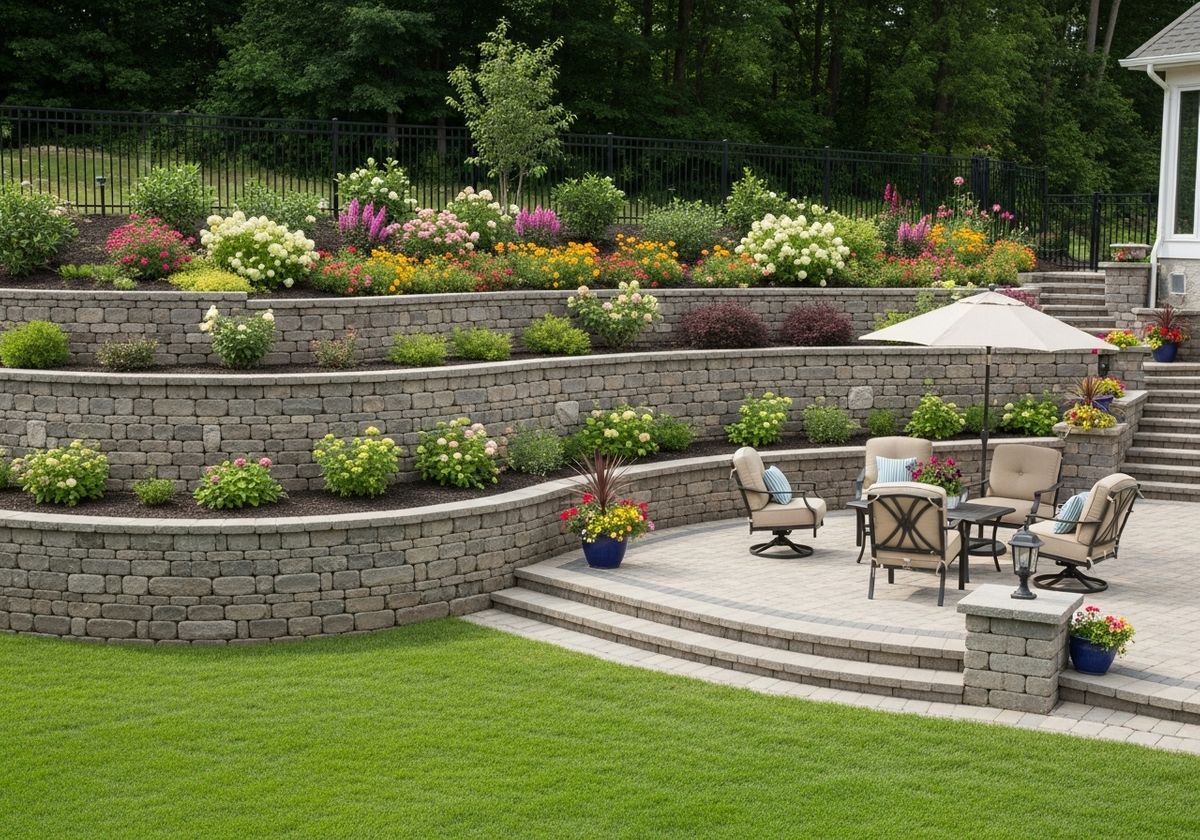
Retaining walls are more than just functional structures; they are essential elements that can dramatically transform landscapes. By holding back soil and creating level surfaces, these walls offer opportunities to add beauty, value, and functionality to any property. Understanding the different types of retaining walls and their benefits can help you make informed decisions about your landscaping needs.
Types of Retaining Walls
There are several types of retaining walls, each suited for different soil conditions, heights, and aesthetic preferences:
- Gravity Walls: These walls rely on their heavy mass to resist pressure from the soil behind them. They are typically made from concrete, stone, or masonry.
- Cantilever Walls: These walls use a horizontal footing to extend under the soil, using the weight of the soil to provide stability. They are ideal for taller walls and can be more cost-effective than gravity walls.
- Sheet Pile Walls: These are constructed by driving interlocking sheets of steel, vinyl, or wood into the ground. They are often used for temporary support or in areas with limited space.
- Buttressed Walls: These walls have vertical supports, or buttresses, on the back of the wall to provide additional stability. They are suitable for very tall walls or areas with unstable soil.
Benefits of Retaining Walls
Retaining walls offer numerous benefits that enhance both the aesthetic appeal and functionality of a landscape:
- Prevent Soil Erosion: One of the primary functions of a retaining wall is to prevent soil erosion, which can damage property and create unsightly landscapes.
- Create Usable Space: By terracing slopes, retaining walls create flat, usable areas for gardens, patios, or other outdoor living spaces.
- Enhance Aesthetics: Retaining walls can be constructed from a variety of materials, allowing them to blend seamlessly with the surrounding landscape. They can also be incorporated into decorative features such as planters or seating.
- Improve Drainage: Proper drainage is essential for the longevity of a retaining wall. Walls can be designed to manage water flow and prevent hydrostatic pressure from building up behind the wall.
Choosing the Right Materials
The choice of materials for a retaining wall can significantly impact its appearance and durability. Common materials include:
- Natural Stone: Offers a timeless, natural look and is highly durable.
- Concrete Blocks: Versatile and cost-effective, available in various colors and textures.
- Treated Timber: Provides a rustic aesthetic but requires regular maintenance.
- Poured Concrete: Strong and customizable, ideal for modern designs.
Retaining walls are a great way to improve the look and function of your outdoor spaces. From preventing erosion to creating new areas for you to enjoy, a professionally designed retaining wall is a great investment. With 20 years of experience, Benninger Landscaping understands how to integrate these structures seamlessly into your landscape, ensuring both beauty and functionality. Consistent quality, leading the natural landscaping industry by example, exceeding customers’ expectations, reliable service, and customer loyalty, are at the core of everything we do. If you're considering a retaining wall for your property, contact us today for a consultation. Let Benninger Landscaping help you transform your landscape with a beautiful and functional retaining wall. Explore our website to learn more about our hardscaping services and how we can enhance your outdoor living space.