
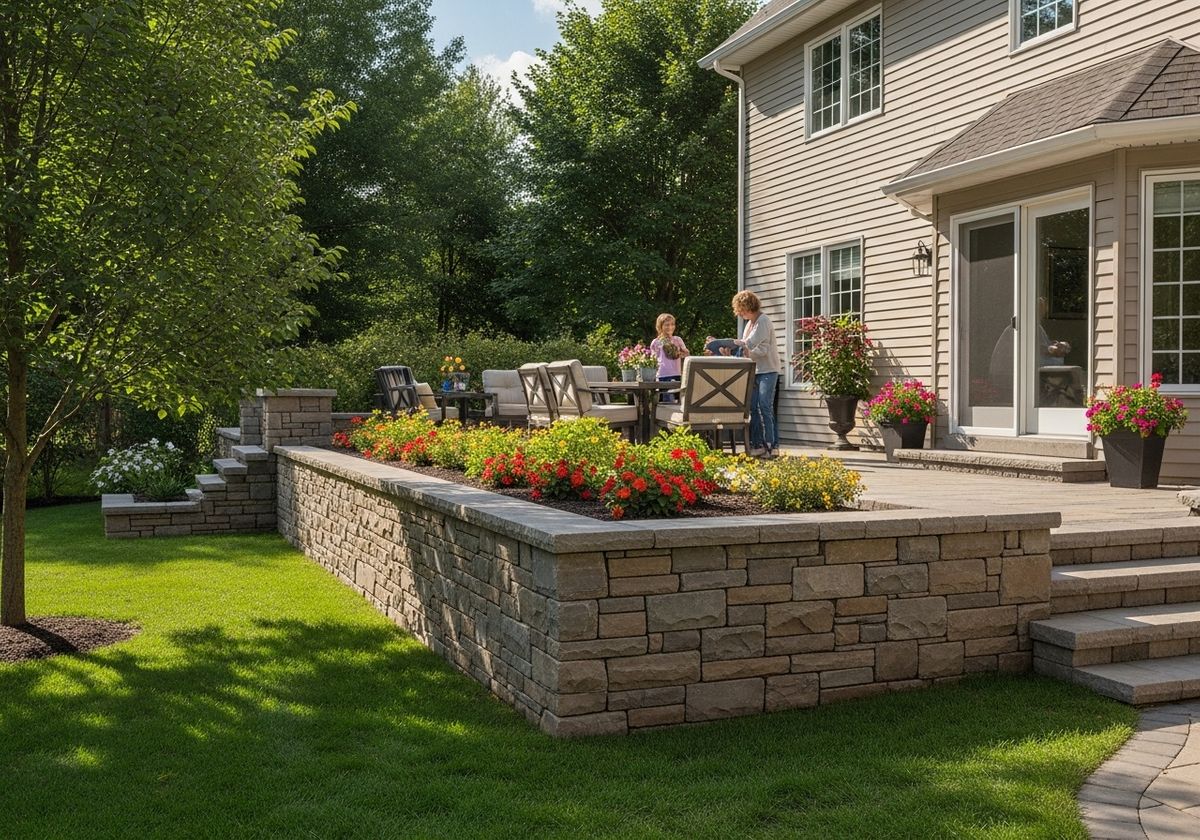
Every landscape presents its unique set of challenges. Slopes can be difficult to manage, erosion can threaten the stability of your yard, and creating level spaces for outdoor living can seem impossible. Fortunately, retaining walls offer effective solutions to these common landscape issues. They not only provide structural support but also add aesthetic appeal to your property.
What is a Retaining Wall?
A retaining wall is a structure designed to hold back soil or earth from a building or other structure. They are typically built to manage changes in grade in a landscape, preventing soil erosion and creating usable level areas. Retaining walls can be constructed from a variety of materials, including concrete blocks, natural stone, timber, and poured concrete.
Benefits of Retaining Walls
- Erosion Control: One of the primary functions of a retaining wall is to prevent soil erosion. By holding back soil on a slope, it minimizes the risk of landslides and washouts, protecting your landscape and property.
- Creating Usable Space: Retaining walls can transform sloped or uneven terrain into flat, usable areas for patios, gardens, or even driveways. This is particularly useful in hilly or mountainous regions where level ground is scarce.
- Improved Drainage: Proper retaining wall design includes drainage systems that redirect water away from the wall and the surrounding soil. This prevents water buildup, which can weaken the structure and lead to failure.
- Aesthetic Appeal: Beyond their functional benefits, retaining walls can enhance the visual appeal of your landscape. They can be designed to complement your home's architecture and landscaping style, adding texture, color, and visual interest.
Types of Retaining Walls
- Gravity Walls: These walls rely on their weight to resist the pressure of the soil behind them. They are typically made from concrete or stone and are suitable for shorter walls.
- Cantilevered Walls: Cantilevered walls consist of a vertical wall connected to a horizontal footing that extends beneath the soil. The weight of the soil on the footing helps to stabilize the wall. These are suitable for taller walls.
- Sheet Pile Walls: These walls are constructed by driving interlocking steel sheets into the ground. They are often used for temporary support during excavation or for waterfront applications.
- Piling Walls: These walls use vertical columns or piles that are driven into the ground at set intervals, and are typically constructed from wood or concrete.
Choosing the Right Material
The material you choose for your retaining wall will depend on several factors, including budget, aesthetics, and structural requirements. Concrete blocks are a popular choice due to their affordability and versatility. Natural stone offers a more rustic and natural look but can be more expensive. Timber is a cost-effective option for smaller walls but may require more maintenance.
Retaining walls offer invaluable solutions for a variety of landscape challenges, from erosion control to creating usable outdoor spaces. Selecting the right type of wall and material is crucial for ensuring its effectiveness and longevity. With 20 years of experience, Benninger Landscaping understands the nuances of landscape design and construction. We are experts in commercial and residential retaining walls, as well as natural landscape design and poolscapes, and offer the very best design and installation of paving stone walkways, driveways and patios; poolscaping and pool design; ponds and waterfalls; sod and seed lawns; and general contracting. Contact us today to discuss your project and discover how we can transform your landscape into a functional and beautiful space. Consistent quality, leading the natural landscaping industry by example, exceeding customers’ expectations, reliable service, and customer loyalty. Schedule a consultation to explore the possibilities!